
Legendary Species · Salmon, steelhead and sea trout
Sea trout
Salmo trutta trutta[1]
Sea trout are the same species as brown trout. As young fish in rivers they cannot be told apart from brown trout, and the two interbreed where both occur.[1]
- 157waters list it
- 26states and regions
- 5agency sources
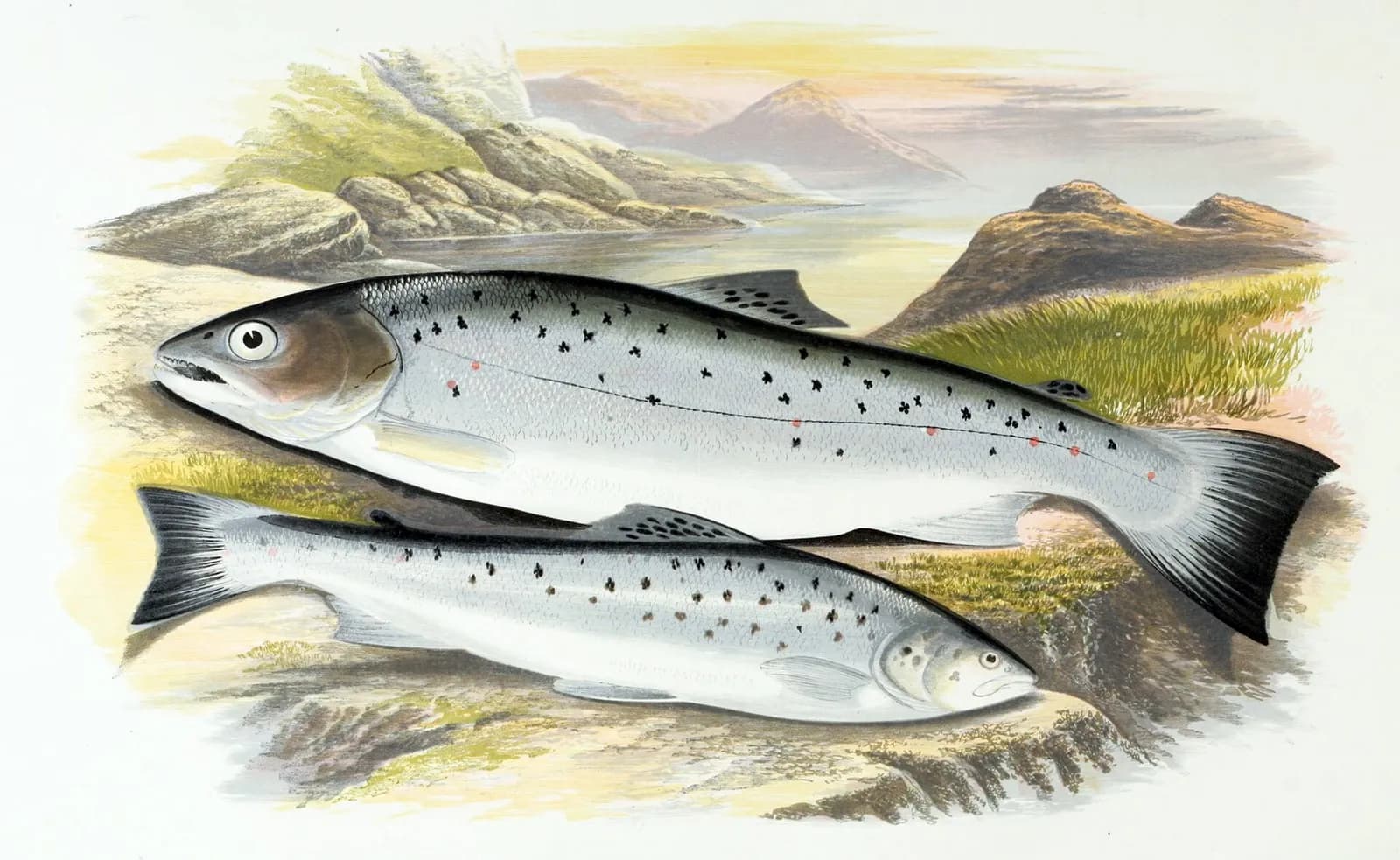
Identification
- Sea trout are the same species as brown trout. As young fish in rivers they cannot be told apart from brown trout, and the two interbreed where both occur.[1]
What the source says
“As juvenile trout in rivers where they grow as parr, sea trout are indistinguishable from brown trout, and these two ecotypes of trout interbreed in rivers where both are present.”
- To tell a sea trout from a salmon, look at the upper jaw: in a sea trout it extends past the rear of the eye; in a salmon it does not.[2]
What the source says
“Salmon (left): Upper jaw does not extend further than the rear of the eye. Sea trout (right): Upper jaw extends further than the rear of the eye.”
- Sea trout often have many black spots extending below the lateral line.[2]
What the source says
“Often has a lot of black spots extending below the lateral line”
- Sea trout have a convex or square tail with a broad tail wrist.[2]
What the source says
“Convex/square tail with a broad tail wrist”
Habitat and range
- Like salmon, sea trout feed and grow at sea before returning to fresh water to spawn, but they stay in coastal areas rather than travelling to distant feeding grounds.[3]
What the source says
“Like Atlantic salmon, sea trout migrate to the sea to feed and grow before returning to freshwater to spawn. But while Atlantic salmon travel to far-off feeding grounds, sea trout stay in coastal areas.”
- In Ireland, sea trout are native and are usually found in low-productivity rivers, especially along the west coast.[1]
What the source says
“Sea trout are native to Ireland and are usually found in low-productivity rivers, particularly along the west coast.”
Life history
- In Scotland, sea trout spawn in the river where they were born, from mid-October to early January.[3]
What the source says
“Sea trout spawn in the river where they were born, from mid-October to early January.”
- Young sea trout usually head to sea from March to June, after a couple of years in the river.[1]
What the source says
“After a couple of years, however, sea trout begin their migration downstream to the sea, usually from March to June.”
Status, protections and rules
Legal status and rules as the agency stated them on the date read. Rules change: check the current regulations for the water.
- Inland Fisheries Ireland says sea trout stocks have collapsed in recent years, with concern about sea-lice infestations, and encourages anglers to practise catch-and-release.[1]
What the source says
“Stocks of sea trout have collapsed in recent years, however, and there are concerns about the impacts of sea-lice infestations. Anglers are encouraged to practice catch-and-release to help conserve sea trout.”
- NatureScot notes that both brown trout and sea trout are UK Biodiversity Action Plan priority fish species.[3]
What the source says
“But both brown trout and sea trout are UK Biodiversity Action Plan priority fish species.”
- Natural Resources Wales rule: on all Welsh rivers, every sea trout over 60 cm must be released with minimum injury and delay.[4]
What the source says
“On all rivers, all sea trout greater than 60cm must be released with minimum injury and delay.”
- GOV.UK: you can be fined for selling rod-caught salmon or sea trout in England and Wales.[5]
What the source says
“You can be fined for selling rod-caught salmon or sea trout in England and Wales.”
Fishing for it: what the agencies say
No agency page we read says how to fish for it; the general advice below is ours.
- Check the agency's run timing, emergency orders and in-season changes before you travel: openings are set by water, section and date.
- Confirm which fish you may keep and how to tell wild from hatchery fish on that water.
- A local guide or shop will know where the fish are in the run this week.
Water temperature
Warm water stresses trout, char and salmon. These are the published temperature lines we show on every gauge, chosen state first: the state agency's own where it publishes one, otherwise federal guidance (said so). Each water page applies them to the gauge's live reading; the flow and temperature checker does the same for any gauge.
None of these waters is in the United States; we hold no temperature guidance for them.
Where to fish for sea trout
Our 157 water pages whose agency species list names sea trout (each list links to the agency page it comes from). A species missing from a list does not mean it is absent: many agencies publish no list for a water.
United Kingdom 79 waters
Scotland 29
Sea trout in ScotlandAll Scotland waters
- River TayAgency list: Scottish Government Marine Directorate
- River TweedAgency list: Scottish Government Marine Directorate
- River NessAgency list: Scottish Government Marine Directorate
- River SpeyAgency list: Scottish Government Marine Directorate
- River ThursoAgency list: Scottish Government Marine Directorate
- River DeveronAgency list: Scottish Government Marine Directorate
- River DonAgency list: Scottish Government Marine Directorate
- River ClydeAgency list: Scottish Government Marine Directorate
- River FindhornAgency list: Scottish Government Marine Directorate
- Border EskAgency list: Environment Agency
- Halladale RiverAgency list: Scottish Government Marine Directorate
- River AnnanAgency list: Scottish Government Marine Directorate
- River AweAgency list: Scottish Government Marine Directorate
- River BeaulyAgency list: Scottish Government Marine Directorate
- River BladnochAgency list: Scottish Government Marine Directorate
- River BroraAgency list: Scottish Government Marine Directorate
- River CononAgency list: Scottish Government Marine Directorate
- River CreeAgency list: Scottish Government Marine Directorate
- River Dee (Aberdeenshire)Agency list: Scottish Government Marine Directorate
- River DoonAgency list: Scottish Government Marine Directorate
- River EweAgency list: Scottish Government Marine Directorate
- River ForthAgency list: Scottish Government Marine Directorate
- River HelmsdaleAgency list: Scottish Government Marine Directorate
- River LaxfordAgency list: Scottish Government Marine Directorate
- River LochyAgency list: Scottish Government Marine Directorate
- River NairnAgency list: Scottish Government Marine Directorate
- River NithAgency list: Scottish Government Marine Directorate
- River North EskAgency list: Scottish Government Marine Directorate
- River South EskAgency list: Scottish Government Marine Directorate
England 28
Sea trout in EnglandAll England waters
- River ItchenAgency list: Environment Agency
- River TestAgency list: Environment Agency
- River Avon (Hampshire)Agency list: Environment Agency
- River Frome (Dorset)Agency list: Environment Agency
- River SevernAgency list: Environment Agency
- River ExeAgency list: Environment Agency
- River PiddleAgency list: Environment Agency
- River TyneAgency list: Environment Agency
- River EdenAgency list: Environment Agency
- River AxeAgency list: Environment Agency
- River CamelAgency list: Environment Agency
- River CoquetAgency list: Environment Agency
- River DartAgency list: Environment Agency
- River Derwent (Cumbria)Agency list: Environment Agency
- River Esk (Cumbria)Agency list: Environment Agency
- River Esk (Yorkshire)Agency list: Environment Agency
- River FoweyAgency list: Environment Agency
- River KentAgency list: Environment Agency
- River Leven (Cumbria)Agency list: Environment Agency
- River LuneAgency list: Environment Agency
- River RibbleAgency list: Environment Agency
- River Stour (Dorset)Agency list: Environment Agency
- River TamarAgency list: Environment Agency
- River TawAgency list: Environment Agency
- River TeesAgency list: Environment Agency
- River TeignAgency list: Environment Agency
- River TorridgeAgency list: Environment Agency
- River WearAgency list: Environment Agency
Wales 22
Sea trout in WalesAll Wales waters
- River TaffAgency list: Environment Agency
- River TeifiAgency list: Environment Agency
- River WyeAgency list: Environment Agency
- River DeeAgency list: Environment Agency
- River UskAgency list: Environment Agency
- River ClwydAgency list: Environment Agency
- River ConwyAgency list: Environment Agency
- River DwyforAgency list: Environment Agency
- River DyfiAgency list: Environment Agency
- River GlaslynAgency list: Environment Agency
- River MawddachAgency list: Environment Agency
- River OgwenAgency list: Environment Agency
- River RheidolAgency list: Environment Agency
- River SeiontAgency list: Environment Agency
- River CleddauAgency list: Environment Agency
- River OgmoreAgency list: Environment Agency
- River TafAgency list: Environment Agency
- River TaweAgency list: Environment Agency
- River TywiAgency list: Environment Agency
- River YstwythAgency list: Environment Agency
- River AeronAgency list: Environment Agency
- River NevernAgency list: Environment Agency
Norway 48 waters
Finnmark 9
Sea trout in FinnmarkAll Finnmark waters
- TanaelvaAgency list: Statistisk sentralbyrå (SSB)
- AltaelvaAgency list: Statistisk sentralbyrå (SSB)
- KomagelvaAgency list: Statistisk sentralbyrå (SSB)
- LakselvaAgency list: Statistisk sentralbyrå (SSB)
- LangfjordelvaAgency list: Statistisk sentralbyrå (SSB)
- NeidenelvaAgency list: Statistisk sentralbyrå (SSB)
- RepparfjordelvaAgency list: Statistisk sentralbyrå (SSB)
- StabburselvaAgency list: Statistisk sentralbyrå (SSB)
- Vestre JakobselvAgency list: Statistisk sentralbyrå (SSB)
Trøndelag 8
Sea trout in TrøndelagAll Trøndelag waters
- ÅrgårdsvassdragetAgency list: Statistisk sentralbyrå (SSB)
- GaulaAgency list: Statistisk sentralbyrå (SSB)
- NamsenAgency list: Statistisk sentralbyrå (SSB)
- NidelvaAgency list: Statistisk sentralbyrå (SSB)
- OrklaAgency list: Statistisk sentralbyrå (SSB)
- SteinsdalselvaAgency list: Statistisk sentralbyrå (SSB)
- StjørdalselvaAgency list: Statistisk sentralbyrå (SSB)
- VerdalselvaAgency list: Statistisk sentralbyrå (SSB)
Rogaland 7
Sea trout in RogalandAll Rogaland waters
- ÅrdalselvaAgency list: Statistisk sentralbyrå (SSB)
- BjerkreimselvaAgency list: Statistisk sentralbyrå (SSB)
- FiggjoAgency list: Statistisk sentralbyrå (SSB)
- HåelvaAgency list: Statistisk sentralbyrå (SSB)
- OgnaAgency list: Statistisk sentralbyrå (SSB)
- SokndalselvaAgency list: Statistisk sentralbyrå (SSB)
- SuldalslågenAgency list: Statistisk sentralbyrå (SSB)
Vestland 7
Sea trout in VestlandAll Vestland waters
- AurlandselvaAgency list: Statistisk sentralbyrå (SSB)
- EtneelvaAgency list: Statistisk sentralbyrå (SSB)
- GaulaAgency list: Statistisk sentralbyrå (SSB)
- GloppenelvaAgency list: Statistisk sentralbyrå (SSB)
- LærdalselviAgency list: Statistisk sentralbyrå (SSB)
- NaustaAgency list: Statistisk sentralbyrå (SSB)
- StryneelvaAgency list: Statistisk sentralbyrå (SSB)
Agder 5
Sea trout in AgderAll Agder waters
- AudnaAgency list: Statistisk sentralbyrå (SSB)
- MandalselvaAgency list: Statistisk sentralbyrå (SSB)
- NidelvaAgency list: Statistisk sentralbyrå (SSB)
- OtraAgency list: Statistisk sentralbyrå (SSB)
- TovdalselvaAgency list: Statistisk sentralbyrå (SSB)
Nordland 4
- BeiarelvaAgency list: Statistisk sentralbyrå (SSB)
- RoksdalsvassdragetAgency list: Statistisk sentralbyrå (SSB)
- SaltdalselvaAgency list: Statistisk sentralbyrå (SSB)
- VefsnaAgency list: Statistisk sentralbyrå (SSB)
Møre og Romsdal 2
- EiraAgency list: Statistisk sentralbyrå (SSB)
- SurnaAgency list: Statistisk sentralbyrå (SSB)
Troms 2
- MålselvaAgency list: Statistisk sentralbyrå (SSB)
- ReisaelvaAgency list: Statistisk sentralbyrå (SSB)
Buskerud 1
Østfold 1
- GlommaAgency list: Statistisk sentralbyrå (SSB)
Telemark 1
Vestfold 1
Ireland 28 waters
Mayo 6
Sea trout in MayoAll Mayo waters
- River MoyAgency list: Inland Fisheries Ireland
- River ErriffAgency list: Inland Fisheries Ireland
- Bundorragha RiverAgency list: Inland Fisheries Ireland
- Carrowmore LakeAgency list: Inland Fisheries Ireland
- Owenduff RiverAgency list: Inland Fisheries Ireland
- Owenmore RiverAgency list: Inland Fisheries Ireland
Cork 4
- Munster BlackwaterAgency list: Inland Fisheries Ireland
- River BandonAgency list: Inland Fisheries Ireland
- River IlenAgency list: Inland Fisheries Ireland
- River LeeAgency list: Inland Fisheries Ireland
Donegal 4
- Gweebarra RiverAgency list: Inland Fisheries Ireland
- River EanyAgency list: Inland Fisheries Ireland
- River EskeAgency list: Inland Fisheries Ireland
- River OweneaAgency list: Inland Fisheries Ireland
Galway 4
- Lough CorribAgency list: Inland Fisheries Ireland
- Ballynahinch RiverAgency list: Inland Fisheries Ireland
- Casla RiverAgency list: Inland Fisheries Ireland
- Dawros RiverAgency list: Inland Fisheries Ireland
Kerry 4
- Lough CurraneAgency list: Inland Fisheries Ireland
- River FealeAgency list: Inland Fisheries Ireland
- River LauneAgency list: Inland Fisheries Ireland
- Caragh RiverAgency list: Inland Fisheries Ireland
Kilkenny 2
- River NoreAgency list: Inland Fisheries Ireland
- River BarrowAgency list: Inland Fisheries Ireland
Limerick 1
Louth 1
- River FaneAgency list: Inland Fisheries Ireland
Meath 1
- River BoyneAgency list: Inland Fisheries Ireland
Sligo 1
Iceland 2 waters
Southern Region 2
Destination hubs
Hubs that list one of these waters, or that a water page is near: each has guides, shops, licences and trip planning for the area.
- Gaula & the Trøndelag salmon rivers, Trøndelag5 sea trout waters
- Speyside: Grantown-on-Spey & Aberlour, Scotland4 sea trout waters
- The Test & Itchen: Hampshire chalk streams, England3 sea trout waters
- Ballina & the River Moy, Mayo1 sea trout water
Sources
Every fact on this page is our paraphrase of the page cited beside it, read on the date shown. Rules and seasons change: check the agency's current regulations before you fish.
- Sea trout (Salmo trutta trutta) | Inland Fisheries Ireland Inland Fisheries Ireland, read Oct 24, 2026.
- DiadSea Booklet: An identification guide to migratory diadromous fish at sea (PDF) Inland Fisheries Ireland, read Oct 24, 2026.
- Brown trout | NatureScot NatureScot, read Oct 24, 2026.
- Natural Resources Wales / Sea trout open seasons and method restrictions Natural Resources Wales, read Oct 24, 2026.
- Freshwater rod fishing rules (printable guide) - GOV.UK GOV.UK (Environment Agency guidance), read Oct 24, 2026.
9 states and regions have a page of sea trout waters of its own (five or more waters).