New to fly fishing?
Start here.
Five steps to your first day on the water.
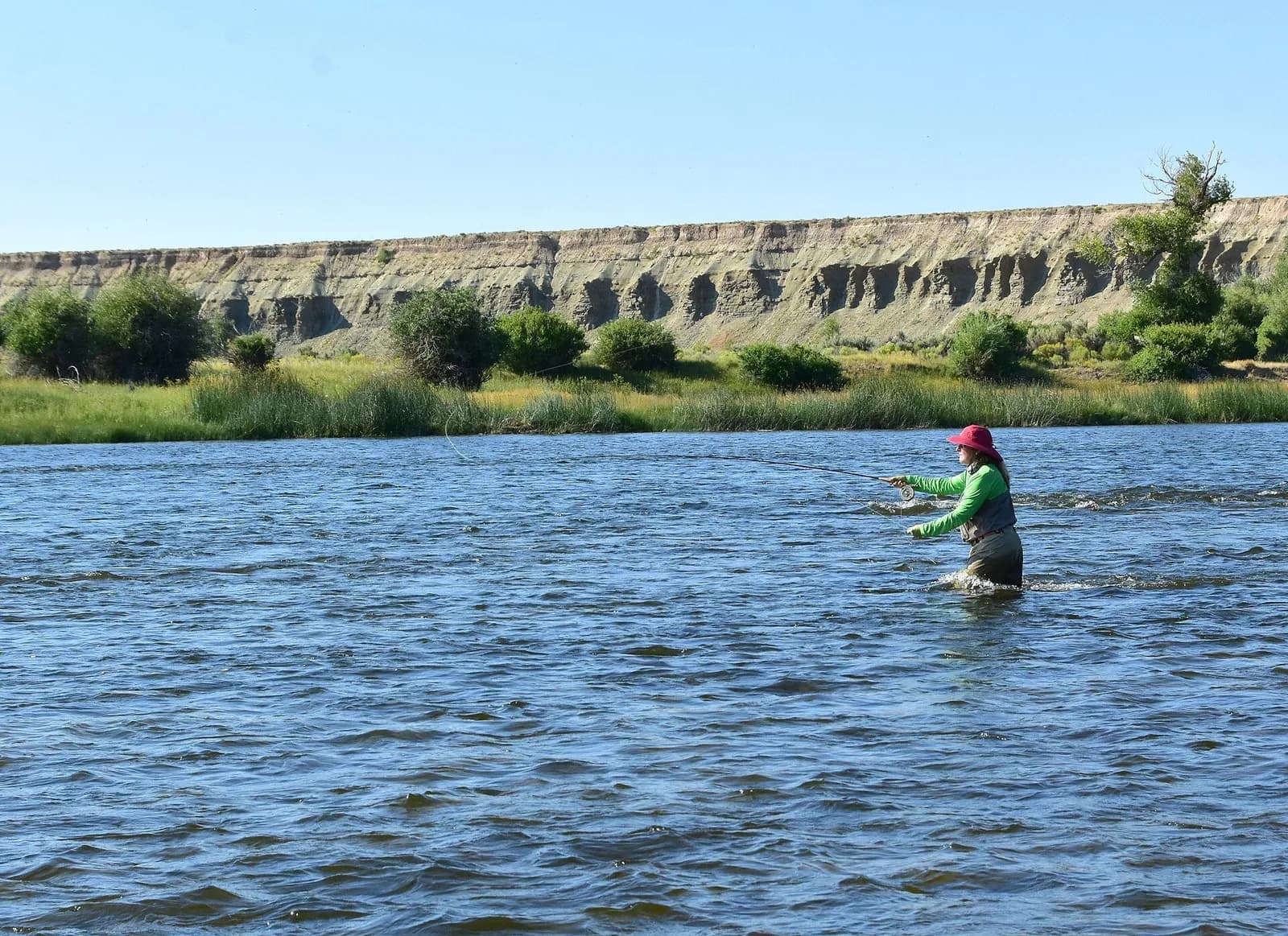
Photo credit
Fly fishing at Seedskadee National Wildlife Refuge, Wyoming. Photo: Tom Koerner, US Fish and Wildlife Service, public domain, via Wikimedia Commons
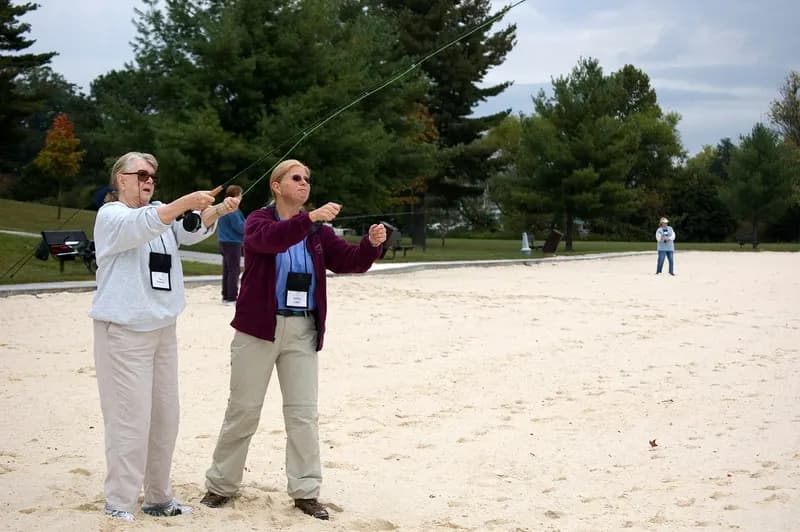
Photo credit
A women's fly-casting class at Claytor Lake State Park, Virginia. Photo: Virginia State Parks, CC BY 2.0, via Wikimedia Commons
Step 1
Gear on a budget
A matched rod, reel and line, a few flies and tippet. Essentials from about $168 (est.).
Your first kit, budget prices Ask a local fly shop
How we estimate prices
Ranges are editorial estimates of typical US retail prices by tier (budget, mid-range, premium), rounded and before tax and shipping. They are not pulled from a retailer feed and are not live prices. Prices change; always check the retailer. Not live prices: check the retailer.
Not sure about a 5-weight? The gear words explained.
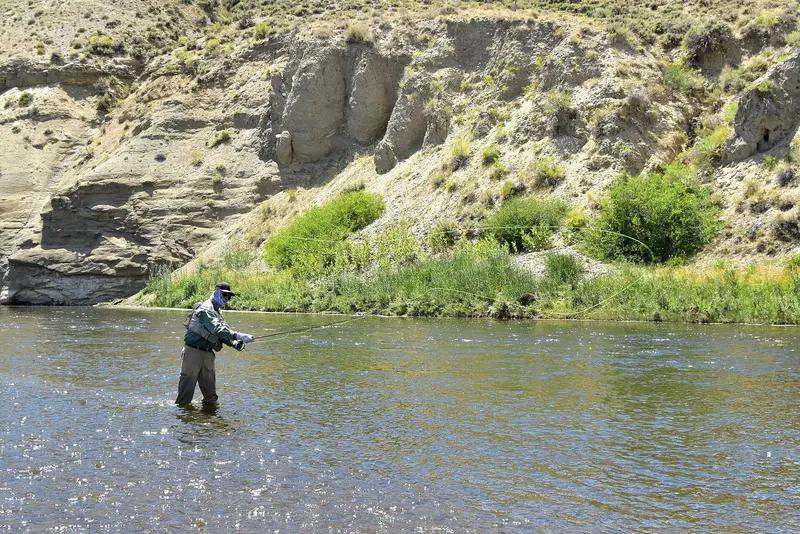
Photo credit
Fly fishing at Seedskadee National Wildlife Refuge, Wyoming. Photo: Tom Koerner, US Fish and Wildlife Service, public domain, via Wikimedia Commons
Step 2
Get your fishing license
Every state sells its own. Pick yours.
Fishing abroad? Destination pages list license rules.
Where the answers come from
Each state page links that state's wildlife agency, from pages we opened ourselves. Fees, ages and free days show only where we quote them from the agency, with the date. Rules change: the agency's page is the authority.
Step 3
Find water near you
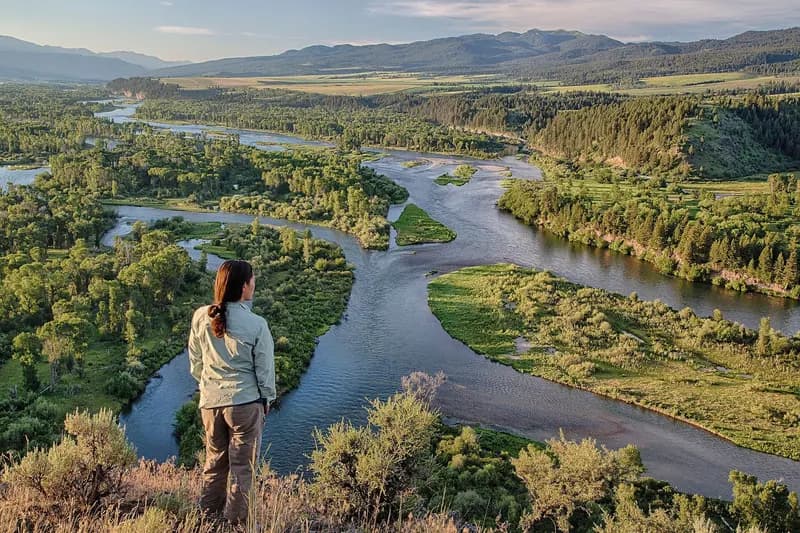
Photo credit
Above the South Fork of the Snake River, Idaho. Photo: Bureau of Land Management, public domain, via Wikimedia Commons
Which water suits a beginner?
Stocked water near town, a lake edge or a small stream with room behind you to cast. Delayed Harvest waters are trout streams the state stocks; for part of the year every fish goes back. A local fly shop knows where fish are biting this week.
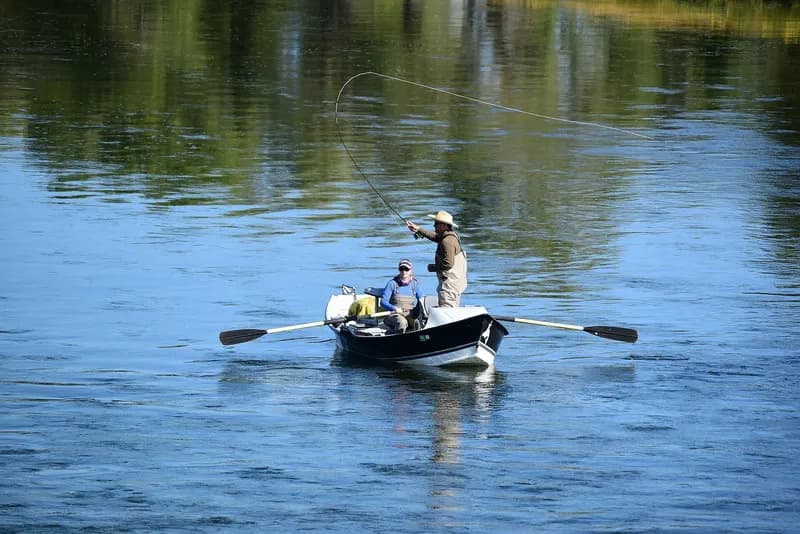
Photo credit
Fly fishing from a drift boat at Seedskadee National Wildlife Refuge, Wyoming. Photo: Tom Koerner, US Fish and Wildlife Service, public domain, via Wikimedia Commons
Step 4
Should you hire a guide?
The fastest way to learn. A guide knows the water and usually brings the flies.
- Half day is often about four hours; a full day about eight, sometimes with lunch.
- Ask before you book: Is my license included? Rods, waders and flies? How many anglers per guide? Wade or float? Cancellation and weather?
- Tipping your guide is common in the U.S.
| Area | Half day | Full day |
|---|---|---|
| Alaska | $500 $400–$885 · 3 guides | $990 $800–$1,200 · 5 guides |
| California | $463 $375–$600 · 8 guides | $625 $400–$800 · 9 guides |
| Colorado | $545 $500–$600 · 7 guides | $688 $625–$783 · 7 guides |
| Gulf & Florida flats | $550 $400–$650 · 11 guides | $800 $650–$1,200 · 15 guides |
| Idaho/Wyoming | $550 $400–$775 · 9 guides | $690 $550–$875 · 13 guides |
| Montana | $625 $550–$650 · 7 guides | $750 $620–$770 · 8 guides |
| Upper Midwest/Driftless | $400 $300–$425 · 7 guides | $550 $450–$600 · 7 guides |
| Northeast | $425 $290–$525 · 7 guides | $500 $380–$800 · 9 guides |
| Ozarks | $400 $350–$500 · 5 guides | $550 $550–$600 · 3 guides |
| Pacific Northwest | $450 $400–$500 · 7 guides | $650 $525–$700 · 13 guides |
| Southeast Appalachians | $400 $220–$450 · 8 guides | $525 $325–$600 · 8 guides |
| Southwest | $420 $350–$675 · 7 guides | $620 $490–$725 · 7 guides |
The middle price from guides' own websites (each guide counted once), with the range. A sample of guides we list, not a survey: check the guide's current rate. Tips, licenses and a third angler are usually extra.
Every published price (223)
Alaska
- Kenai River Float-n-Fish (opens in a new tab): Half day, 1–2 anglers $500 Nov 8, 2026
- Kenai River Float-n-Fish (opens in a new tab): Full day, 1–2 anglers $900 Nov 8, 2026
- Cooper Landing Fishing Guide (opens in a new tab): Full day, 1–2 anglers $990 Nov 8, 2026
- Chugach Backcountry Fishing (opens in a new tab): Full day, per person $325 Nov 8, 2026
- Chugach Backcountry Fishing (opens in a new tab): Half day, per person $275 Nov 8, 2026
- Dave Fish Alaska (opens in a new tab): Half day, per person $275 Nov 8, 2026
- Dave Fish Alaska (opens in a new tab): Full day, per person $395 Nov 8, 2026
- Fishology Alaska (opens in a new tab): Full day $1200 Nov 8, 2026
- Fishology Alaska (opens in a new tab): Full day, per person $325 Nov 8, 2026
- Kenai Drift Anglers (opens in a new tab): Full day, 1–2 anglers $1000 Nov 8, 2026
- Kenai Drift Anglers (opens in a new tab): Half day, 1–2 anglers $885 Nov 8, 2026
- Kenai Methods Guide Service (opens in a new tab): Full day, per person $300 Nov 8, 2026
- RiverRise Fishing Guides (opens in a new tab): Half day, per person $225.00 Nov 8, 2026
- RiverRise Fishing Guides (opens in a new tab): Full day, per person $275.00 Nov 8, 2026
- Secret Waters Guide Service (opens in a new tab): Full day, 1–2 anglers $800 Nov 8, 2026
- Secret Waters Guide Service (opens in a new tab): Half day, 1–2 anglers $400 Nov 8, 2026
California
- Ac Fly Fishing (opens in a new tab): Half day, 1–2 anglers $475 Nov 8, 2026
- Ac Fly Fishing (opens in a new tab): Full day, 1–2 anglers $625 Nov 8, 2026
- Blue Line Fly Fishing (opens in a new tab): Full day, 1–2 anglers $450 Nov 8, 2026
- Blue Line Fly Fishing (opens in a new tab): Full day, 1–2 anglers $350 Nov 8, 2026
- Central Coast Fly Fishing (opens in a new tab): Full day, 1–2 anglers $500 Nov 8, 2026
- Central Coast Fly Fishing (opens in a new tab): Half day, 1–2 anglers $375 Nov 8, 2026
- Hookem Hecky's Guide Service (opens in a new tab): Full day, 1–2 anglers $650.00 Nov 8, 2026
- Hookem Hecky's Guide Service (opens in a new tab): Half day, 1–2 anglers $450.00 Nov 8, 2026
- Mackenzie On The Fly - Guide Service (opens in a new tab): Full day, 1–2 anglers $800 Nov 8, 2026
- Mackenzie On The Fly - Guide Service (opens in a new tab): Half day, 1–2 anglers $600 Nov 8, 2026
- Hume Fly Fisher (opens in a new tab): Full day $575 Nov 8, 2026
- Hume Fly Fisher (opens in a new tab): Half day $450 Nov 8, 2026
- Matt Heron Fly Fishing (opens in a new tab): Half day, 1–2 anglers $450 Nov 8, 2026
- Matt Heron Fly Fishing (opens in a new tab): Full day, 1–2 anglers $625 Nov 8, 2026
- Performance Anglers (opens in a new tab): Full day, 1–2 anglers $700.00 Nov 8, 2026
- Performance Anglers (opens in a new tab): Half day, 1–2 anglers $500.00 Nov 8, 2026
- Trucha Fly Fishing Guide Service (opens in a new tab): Half day, 1–2 anglers $500 Nov 8, 2026
- Trucha Fly Fishing Guide Service (opens in a new tab): Full day, 1–2 anglers $600 Nov 8, 2026
Colorado
- ArkAnglers (opens in a new tab): Half day, 1–2 anglers $485 Nov 8, 2026
- ArkAnglers (opens in a new tab): Full day, 1–2 anglers $625 Nov 8, 2026
- ArkAnglers (opens in a new tab): Half day, 1–2 anglers $580 Nov 8, 2026
- ArkAnglers (opens in a new tab): Full day, 1–2 anglers $750 Nov 8, 2026
- Aspen Trout Guides,inc. (opens in a new tab): Half day, 1–2 anglers $500 Nov 8, 2026
- Aspen Trout Guides,inc. (opens in a new tab): Full day, 1–2 anglers $700 Nov 8, 2026
- Aspen Trout Guides,inc. (opens in a new tab): Half day, 1–2 anglers $700 Nov 8, 2026
- Aspen Trout Guides,inc. (opens in a new tab): Full day, 1–2 anglers $800 Nov 8, 2026
- Colorado River Outfitters (opens in a new tab): Half day, 1–2 anglers $625.00 Nov 8, 2026
- Colorado River Outfitters (opens in a new tab): Full day $850.00 Nov 8, 2026
- Colorado River Outfitters (opens in a new tab): Half day, 1–2 anglers $540.00 Nov 8, 2026
- Colorado River Outfitters (opens in a new tab): Full day, 1–2 anglers $715.00 Nov 8, 2026
- Galvin Guiding (opens in a new tab): Half day, 1–2 anglers $545 Nov 8, 2026
- Galvin Guiding (opens in a new tab): Full day, 1–2 anglers $645 Nov 8, 2026
- Gone Fishing Colorado (opens in a new tab): Half day, 1–2 anglers $600 Nov 8, 2026
- Gone Fishing Colorado (opens in a new tab): Full day, 1–2 anglers $800 Nov 8, 2026
- Gone Fishing Colorado (opens in a new tab): Half day $400 Nov 8, 2026
- Gone Fishing Colorado (opens in a new tab): Full day $550 Nov 8, 2026
- Gunnison Valley Anglers (opens in a new tab): Full day, 1–2 anglers $675.00 Nov 8, 2026
- Gunnison Valley Anglers (opens in a new tab): Half day, 1–2 anglers $550.00 Nov 8, 2026
- Gunnison Valley Anglers (opens in a new tab): Full day, 1–2 anglers $575.00 Nov 8, 2026
- Gunnison Valley Anglers (opens in a new tab): Half day, 1–2 anglers $475.00 Nov 8, 2026
- Harcourt Fly Fishing 3G (opens in a new tab): Half day, 1–2 anglers $550 Nov 8, 2026
- Harcourt Fly Fishing 3G (opens in a new tab): Full day, 1–2 anglers $750 Nov 8, 2026
Gulf & Florida flats
- A Guide Fishing Service (opens in a new tab): Half day $500 Nov 8, 2026
- A Guide Fishing Service (opens in a new tab): Full day $800 Nov 8, 2026
- Boca on the Fly (opens in a new tab): Full day $650.00 Nov 8, 2026
- Boca on the Fly (opens in a new tab): Half day $475.00 Nov 8, 2026
- Capt Paul Hobby Fishing Charters (opens in a new tab): Half day $550 Nov 8, 2026
- Capt Paul Hobby Fishing Charters (opens in a new tab): Full day $850 Nov 8, 2026
- Capt. Ron Doerr's Bite Me Charters (opens in a new tab): Half day $500 Nov 8, 2026
- Capt. Ron Doerr's Bite Me Charters (opens in a new tab): Full day $800 Nov 8, 2026
- Dm Fly Fishing (opens in a new tab): Half day, 1–2 anglers $600 Nov 8, 2026
- Dm Fly Fishing (opens in a new tab): Full day, 1–2 anglers $800 Nov 8, 2026
- Kingfisher Backcountry Charters (opens in a new tab): Half day, 1–2 anglers $550 Nov 8, 2026
- Kingfisher Backcountry Charters (opens in a new tab): Full day, 1–2 anglers $750 Nov 8, 2026
- Capt. Larry Sydnor - Your Florida Keys Fishing Guide (opens in a new tab): Full day, 1–2 anglers $900 Nov 8, 2026
- Capt. Steven Lamp (opens in a new tab): Full day, 1–2 anglers $1100.00 Nov 8, 2026
- Captain Eric Olsen (opens in a new tab): Half day $400 Nov 8, 2026
- Captain Eric Olsen (opens in a new tab): Full day $650 Nov 8, 2026
- Endless Flat Charters (opens in a new tab): Full day $850.00 Nov 8, 2026
- FlatsFish'r Charters (opens in a new tab): Full day $900.00 Nov 8, 2026
- FlatsFish'r Charters (opens in a new tab): Half day $500.00 Nov 8, 2026
- Florida Keys Flats Fishing (opens in a new tab): Half day, 1–2 anglers $650 Nov 8, 2026
- Florida Keys Flats Fishing (opens in a new tab): Full day, 1–2 anglers $750 Nov 8, 2026
- Salty Bird Fishing Charters (opens in a new tab): Full day, 1–2 anglers $750 Nov 8, 2026
- Salty Bird Fishing Charters (opens in a new tab): Half day, 1–2 anglers $550 Nov 8, 2026
- Shallow Water Expeditions (opens in a new tab): Full day, 1–2 anglers $1200 Nov 8, 2026
- Southern Fly Expeditions (opens in a new tab): Full day $900 Nov 8, 2026
- Southern Fly Expeditions (opens in a new tab): Half day $650 Nov 8, 2026
Idaho/Wyoming
- Bottorff Guide Service (opens in a new tab): Full day, 1–2 anglers $600 Nov 8, 2026
- Bucktrout Outfitters (opens in a new tab): Full day, 1–2 anglers $700 Nov 8, 2026
- Dunoir Fishing Adventures (opens in a new tab): Full day, 1–2 anglers $675 Nov 8, 2026
- Dunoir Fishing Adventures (opens in a new tab): Half day, 1–2 anglers $550 Nov 8, 2026
- Dunoir Fishing Adventures (opens in a new tab): Full day, 1–2 anglers $550 Nov 8, 2026
- Dunoir Fishing Adventures (opens in a new tab): Half day, 1–2 anglers $450 Nov 8, 2026
- Fish The Fly Guide Service (opens in a new tab): Full day, 1–2 anglers $825 Nov 8, 2026
- Fish The Fly Guide Service (opens in a new tab): Half day, 1–2 anglers $725 Nov 8, 2026
- Grand Fishing Adventures (opens in a new tab): Full day, 1–2 anglers $865 Nov 8, 2026
- Grand Fishing Adventures (opens in a new tab): Half day, 1–2 anglers $700 Nov 8, 2026
- Grand Teton Fly Fishing (opens in a new tab): Full day, 1–2 anglers $850 Nov 8, 2026
- Grand Teton Fly Fishing (opens in a new tab): Half day, 1–2 anglers $750 Nov 8, 2026
- Grand Teton Fly Fishing (opens in a new tab): Full day, 1–2 anglers $850 Nov 8, 2026
- Grey Reef Anglers & Wingshooting Lodge and Guide Service (opens in a new tab): Full day, 1–2 anglers $675 Nov 8, 2026
- Grey Reef Anglers & Wingshooting Lodge and Guide Service (opens in a new tab): Half day $550 Nov 8, 2026
- Grey Reef Anglers & Wingshooting Lodge and Guide Service (opens in a new tab): Full day, 1–2 anglers $675 Nov 8, 2026
- Henry's Fork Anglers (opens in a new tab): Full day, 1–2 anglers $875.00 Nov 8, 2026
- Lone Tree Drift Boat Rentals and Guide Service (opens in a new tab): Full day, 1–2 anglers $550 Nov 8, 2026
- Lone Tree Drift Boat Rentals and Guide Service (opens in a new tab): Half day, 1–2 anglers $425 Nov 8, 2026
- Sweetwater Fishing Expeditions (opens in a new tab): Full day, 1–2 anglers $690 Nov 8, 2026
- Two Dogs Guide Service (opens in a new tab): Full day, 1–2 anglers $550 Nov 8, 2026
- Two Dogs Guide Service (opens in a new tab): Half day, 1–2 anglers $400 Nov 8, 2026
- Two Dogs Guide Service (opens in a new tab): Full day, 1–2 anglers $650 Nov 8, 2026
- Western River Anglers (opens in a new tab): Full day, 1–2 anglers $875 Nov 8, 2026
- Western River Anglers (opens in a new tab): Half day, 1–2 anglers $775 Nov 8, 2026
- Western River Anglers (opens in a new tab): Full day, 1–2 anglers $875 Nov 8, 2026
- Western River Anglers (opens in a new tab): Half day, 1–2 anglers $775 Nov 8, 2026
- Wyoming Fly Fishing Guide Service (opens in a new tab): Full day, 1–2 anglers $650 Nov 8, 2026
- Wyoming Fly Fishing Guide Service (opens in a new tab): Half day $525 Nov 8, 2026
- Wyoming Fly Fishing Guide Service (opens in a new tab): Full day, 1–2 anglers $650 Nov 8, 2026
Montana
- East Slope Outdoors (opens in a new tab): Half day, 1–2 anglers $625 Nov 8, 2026
- East Slope Outdoors (opens in a new tab): Full day, 1–2 anglers $750 Nov 8, 2026
- East Slope Outdoors (opens in a new tab): Full day, 1–2 anglers $750 Nov 8, 2026
- Fins & Feathers Guide Service (opens in a new tab): Full day, 1–2 anglers $750 Nov 8, 2026
- Fins & Feathers Guide Service (opens in a new tab): Half day, 1–2 anglers $650 Nov 8, 2026
- Fly Fishing Always (opens in a new tab): Full day, 1–2 anglers $620.00 Nov 8, 2026
- Fly Fishing Always (opens in a new tab): Half day, 1–2 anglers $560.00 Nov 8, 2026
- Four Rivers Fishing Company (opens in a new tab): Full day, 1–2 anglers $750 Nov 8, 2026
- Living Water Guide Service and Outfitting (opens in a new tab): Full day, 1–2 anglers $750 Nov 8, 2026
- Living Water Guide Service and Outfitting (opens in a new tab): Half day $600 Nov 8, 2026
- Montana Angler (opens in a new tab): Full day, 1–2 anglers $770 Nov 8, 2026
- Montana Angler (opens in a new tab): Half day, 1–2 anglers $630 Nov 8, 2026
- Montana Fishing Company (opens in a new tab): Full day, 1–2 anglers $650.00 Nov 8, 2026
- Montana Fishing Company (opens in a new tab): Half day, 1–2 anglers $550.00 Nov 8, 2026
- Montana Fishing Company (opens in a new tab): Full day $650.00 Nov 8, 2026
- Montana Fly Fishing Guides (opens in a new tab): Full day, 1–2 anglers $725 Nov 8, 2026
- Montana Fly Fishing Guides (opens in a new tab): Half day, 1–2 anglers $625 Nov 8, 2026
Upper Midwest/Driftless
- Driftless Flyfishing Company (opens in a new tab): Full day, 1–2 anglers $600.00 Nov 8, 2026
- Driftless Flyfishing Company (opens in a new tab): Half day, 1–2 anglers $400 Nov 8, 2026
- Eau Claire Anglers (opens in a new tab): Full day, 1–2 anglers $500 Nov 8, 2026
- Eau Claire Anglers (opens in a new tab): Full day, 1–2 anglers $400 Nov 8, 2026
- Eau Claire Anglers (opens in a new tab): Half day $300 Nov 8, 2026
- Erik Helm's Classical Angler Fly-Fishing Schools and Guide Service (opens in a new tab): Full day, 1–2 anglers $525 Nov 8, 2026
- Erik Helm's Classical Angler Fly-Fishing Schools and Guide Service (opens in a new tab): Half day, 1–2 anglers $425 Nov 8, 2026
- Gray Drake Lodge and Outfitters (opens in a new tab): Full day, 1–2 anglers $600.00 Nov 8, 2026
- Gray Drake Lodge and Outfitters (opens in a new tab): Half day, 1–2 anglers $425.00 Nov 8, 2026
- Headwaters Fly Fishing Company (opens in a new tab): Full day, 1–2 anglers $600 Nov 8, 2026
- Headwaters Fly Fishing Company (opens in a new tab): Half day, 1–2 anglers $350 Nov 8, 2026
- Mangans Cast A Fly (opens in a new tab): Full day, 1–2 anglers $500.00 Nov 8, 2026
- Mangans Cast A Fly (opens in a new tab): Half day, 1–2 anglers $400.00 Nov 8, 2026
- Riversnorth Fly Fishing Guide Service (opens in a new tab): Full day, 1–2 anglers $550 Nov 8, 2026
- Riversnorth Fly Fishing Guide Service (opens in a new tab): Half day, 1 angler $375 Nov 8, 2026
Northeast
- Appalachian Fishing Guides LLC (opens in a new tab): Half day, 1–2 anglers $375 Nov 8, 2026
- Appalachian Fishing Guides LLC (opens in a new tab): Full day, 1–2 anglers $500 Nov 8, 2026
- Baxter House Fly Fishing Outfitters (opens in a new tab): Full day, 1–2 anglers $550.00 Nov 8, 2026
- Baxter House Fly Fishing Outfitters (opens in a new tab): Half day, 1–2 anglers $425.00 Nov 8, 2026
- Blue Mind Outfitter (opens in a new tab): Full day $650.00 Nov 8, 2026
- Blue Mind Outfitter (opens in a new tab): Half day $450.00 Nov 8, 2026
- Bradford Camps (opens in a new tab): Full day, 1–2 anglers $450 Nov 8, 2026
- Eastern CT Fly Fishing (opens in a new tab): Half day, 1–2 anglers $350.00 Nov 8, 2026
- Eastern CT Fly Fishing (opens in a new tab): Full day, 1–2 anglers $450.00 Nov 8, 2026
- Flylight Charters (opens in a new tab): Half day, 1–2 anglers $525 Nov 8, 2026
- Flylight Charters (opens in a new tab): Full day, 1–2 anglers $800 Nov 8, 2026
- Grant's Kennebago Camps (opens in a new tab): Full day $380 Nov 8, 2026
- Grant's Kennebago Camps (opens in a new tab): Half day $290 Nov 8, 2026
- Guide Salmon River Pulaski NY Drift Boat Steelhead Fishing Report (opens in a new tab): Full day, 1–2 anglers $450 Nov 8, 2026
- Handmade Angler (opens in a new tab): Full day, 1–2 anglers $600 Nov 8, 2026
- Handmade Angler (opens in a new tab): Half day, 1–2 anglers $500 Nov 8, 2026
Ozarks
- CJ's White River Outfitter (opens in a new tab): Full day, 1–2 anglers $550.00 Nov 8, 2026
- CJ's White River Outfitter (opens in a new tab): Half day, 1–2 anglers $425.00 Nov 8, 2026
- Dally's Ozark Fly Fisher (opens in a new tab): Full day, 1–2 anglers $600.00 Nov 8, 2026
- Dally's Ozark Fly Fisher (opens in a new tab): Half day, 1–2 anglers $500.00 Nov 8, 2026
- NWATROUT Fly Fishing Guide (opens in a new tab): Half day, 1–2 anglers $350 Nov 8, 2026
- Tailwater Fishing Company (opens in a new tab): Half day, 1–2 anglers $400 Nov 8, 2026
- Tailwater Fishing Company (opens in a new tab): Full day, 1–2 anglers $550 Nov 8, 2026
- CastAway Charters - Taneycomo Trout Guide (opens in a new tab): Half day, 1–2 anglers $375 Nov 8, 2026
Pacific Northwest
- Anadromy Fly Fishing (opens in a new tab): Full day, 1–2 anglers $650 Nov 8, 2026
- Blue Heron Guide Service (opens in a new tab): Full day, 1–2 anglers $600 Nov 8, 2026
- Brazda's Fly Fishing (opens in a new tab): Full day, 1–2 anglers $670 Nov 8, 2026
- Brian Silvey's FLY FISHING GUIDE SERVICE (opens in a new tab): Full day, 1–2 anglers $700 Nov 8, 2026
- Buried Hook Fly Fishing Guides (opens in a new tab): Half day $450.00 Nov 8, 2026
- Buried Hook Fly Fishing Guides (opens in a new tab): Full day $675.00 Nov 8, 2026
- Chrome Chasers Fly Fishing (opens in a new tab): Full day, 1–2 anglers $700 Nov 8, 2026
- Steelhead Outfitters (opens in a new tab): Full day, 1–2 anglers $650 Nov 8, 2026
- Top Fly Guide Service (opens in a new tab): Full day, 1–2 anglers $595 Nov 8, 2026
- Top Fly Guide Service (opens in a new tab): Half day, 1–2 anglers $425 Nov 8, 2026
- Deep Canyon Outfitters (opens in a new tab): Full day, 1–2 anglers $525 Nov 8, 2026
- Deep Canyon Outfitters (opens in a new tab): Half day, 1–2 anglers $400 Nov 8, 2026
- Ellensburg Angler (opens in a new tab): Full day, 1–2 anglers $600.00 Nov 8, 2026
- Ellensburg Angler (opens in a new tab): Half day, 1–2 anglers $475.00 Nov 8, 2026
- Holloway Bros Fishing (opens in a new tab): Full day, 1–2 anglers $700 Nov 8, 2026
- Holloway Bros Fishing (opens in a new tab): Half day, 1–2 anglers $500 Nov 8, 2026
- Legendary Outfitters LLC (opens in a new tab): Full day, 1–2 anglers $700 Nov 8, 2026
- Legendary Outfitters LLC (opens in a new tab): Half day, 1–2 anglers $500 Nov 8, 2026
- Wenatchee Fly Company and Guide Service (opens in a new tab): Full day, 1–2 anglers $550 Nov 8, 2026
- Wenatchee Fly Company and Guide Service (opens in a new tab): Half day, 1–2 anglers $450 Nov 8, 2026
Southeast Appalachians
- Appalachian Fly and Yak (opens in a new tab): Half day, 1–2 anglers $220 Nov 8, 2026
- Appalachian Fly and Yak (opens in a new tab): Full day, 1–2 anglers $325 Nov 8, 2026
- Beast Coast Anglers - Guided Fly Fishing (opens in a new tab): Half day, 1–2 anglers $350 Nov 8, 2026
- Beast Coast Anglers - Guided Fly Fishing (opens in a new tab): Full day, 1–2 anglers $550 Nov 8, 2026
- Bowman Fly Fishing (opens in a new tab): Half day, 1–2 anglers $425 Nov 8, 2026
- Bowman Fly Fishing (opens in a new tab): Full day, 1–2 anglers $575 Nov 8, 2026
- Cool Water Outfitters (opens in a new tab): Half day, 1–2 anglers $400 Nov 8, 2026
- Cool Water Outfitters (opens in a new tab): Full day, 1–2 anglers $500 Nov 8, 2026
- Fly Fishing the Smokies (opens in a new tab): Half day, 1–2 anglers $350 Nov 8, 2026
- Fly Fishing the Smokies (opens in a new tab): Full day, 1–2 anglers $550 Nov 8, 2026
- Fly Fishing the Smokies (opens in a new tab): Half day, 1–2 anglers $400 Nov 8, 2026
- Fly Fishing the Smokies (opens in a new tab): Full day, 1–2 anglers $600 Nov 8, 2026
- Frog Hollow Fly Fishing (opens in a new tab): Half day, 1–2 anglers $450 Nov 8, 2026
- Frog Hollow Fly Fishing (opens in a new tab): Full day, 1–2 anglers $600 Nov 8, 2026
- JA Sharpe Fly Fishing (opens in a new tab): Full day $500.00 Nov 8, 2026
- JA Sharpe Fly Fishing (opens in a new tab): Half day $450.00 Nov 8, 2026
- R&R Fly Fishing (opens in a new tab): Full day, 1–2 anglers $500 Nov 8, 2026
- R&R Fly Fishing (opens in a new tab): Half day, 1–2 anglers $400 Nov 8, 2026
Southwest
- Born N' Raised Guide Service on the San Juan River (opens in a new tab): Full day, 1–2 anglers $575 Nov 8, 2026
- Born N' Raised Guide Service on the San Juan River (opens in a new tab): Half day, 1–2 anglers $450 Nov 8, 2026
- Falcons Ledge Fly Fishing Lodge (opens in a new tab): Full day, 1–2 anglers $595 Nov 8, 2026
- Falcons Ledge Fly Fishing Lodge (opens in a new tab): Half day, 1–2 anglers $350 Nov 8, 2026
- Local Waters Fly Fishing Guides (opens in a new tab): Half day, 1–2 anglers $400 Nov 8, 2026
- Local Waters Fly Fishing Guides (opens in a new tab): Full day, 1–2 anglers $620 Nov 8, 2026
- Old Moe Guide Service (opens in a new tab): Full day, 1–2 anglers $725 Nov 8, 2026
- Old Moe Guide Service (opens in a new tab): Half day, 1–2 anglers $675 Nov 8, 2026
- Park City Fly Fishing Guides (opens in a new tab): Half day, 1–2 anglers $400 Nov 8, 2026
- Park City Fly Fishing Guides (opens in a new tab): Full day, 1–2 anglers $640 Nov 8, 2026
- Park City Fly Fishing Guides (opens in a new tab): Full day, 1–2 anglers $750 Nov 8, 2026
- Solitary Angler (opens in a new tab): Full day, 1–2 anglers $490.00 Nov 8, 2026
- Solitary Angler (opens in a new tab): Half day, 1–2 anglers $420.00 Nov 8, 2026
- Wild Utah Fly Fishing (opens in a new tab): Half day $500 Nov 8, 2026
- Wild Utah Fly Fishing (opens in a new tab): Full day $700 Nov 8, 2026
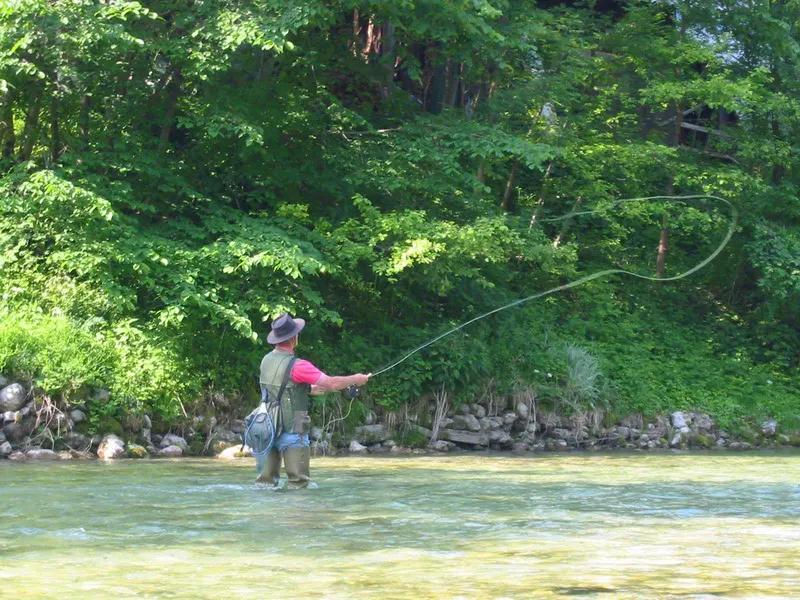
Photo credit
Fly fishing the Sava Bohinjka, Slovenia. Photo: Ziga, public domain, via Wikimedia Commons
Step 5
Learn the basics
One cast and three knots get you fishing.
Your first castPractice on grass first, with a scrap of yarn tied on instead of a fly.
- Hold the cork grip with your thumb on top, pointing up the rod.
- Strip about 20 to 30 feet of line past the rod tip and lay it straight out in front of you.
- Start with the rod tip low. Lift it smoothly, speeding up, and stop sharply with the rod just past upright, around one o'clock.
- Pause. Let the line unroll and straighten behind you; turn your head to watch it at first.
- Bring the rod forward, speeding up, and stop sharply around ten o'clock. The line rolls out in front of you.
- As the line settles on the water, lower the rod tip. Short strokes and firm stops beat power.
Trees behind you? Use a roll cast: no back cast at all.
Three knots
Improved clinch knotTies the fly to your tippet.
- Push the end of the tippet through the eye of the hook and pull through about 6 inches.
- Wrap the end around the main line five times, working up the line away from the hook.
- Bring the end back and push it through the small loop just above the hook eye.
- Now tuck the end through the big loop you just made. This tuck is what makes it "improved".
- Wet the knot, hold the end and pull the main line so the wraps slide down snug against the eye.
- Trim the end close, leaving a tiny tag.
Use fewer wraps on thick line and more on very thin tippet.
Surgeon's knotJoins new tippet to the end of your leader.
- Cut a length of tippet, about 2 to 3 feet, from the spool.
- Lay it beside the end of your leader so the two overlap by about 6 inches, the ends pointing opposite ways.
- Hold the two lines together as one and make a loop.
- Pass the leader's end and the whole piece of tippet through the loop together.
- Pass them through the same loop a second time.
- Wet the knot and pull all four strands at once, two in each hand, until it is tight. Trim both short ends.
Going through three times makes a triple surgeon's knot, a little stronger on very fine tippet.
Perfection loopPuts a small fixed loop on the end of a leader, for loop-to-loop connections.
- Make a loop by laying the end of the line behind the main line.
- Wrap the end around in front of that first loop to make a second, smaller loop on top of it.
- Lay the end between the two loops and pinch it there.
- Reach through the first loop, take hold of the second loop and pull it through the first.
- Wet it and pull the new loop against the main line to tighten. The loose end should stick out to the side.
- Trim the end close.
To join two loops, push one loop through the other, then pass the far end of the second line through the first loop. Pulled tight, they lock together flat, like a square knot.
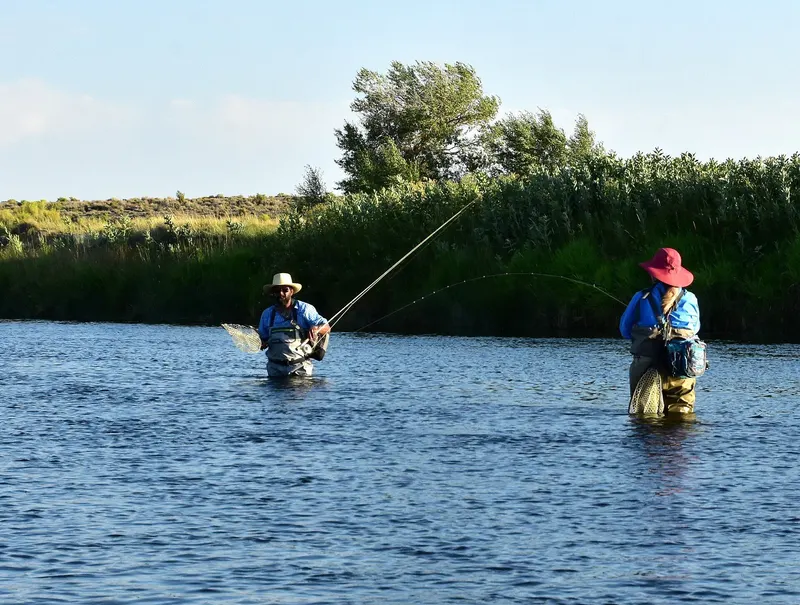
Photo credit
Fly fishing at Seedskadee National Wildlife Refuge, Wyoming. Photo: Tom Koerner, US Fish and Wildlife Service, public domain, via Wikimedia Commons
Learn with others
Clubs, classes and groups welcome beginners.