
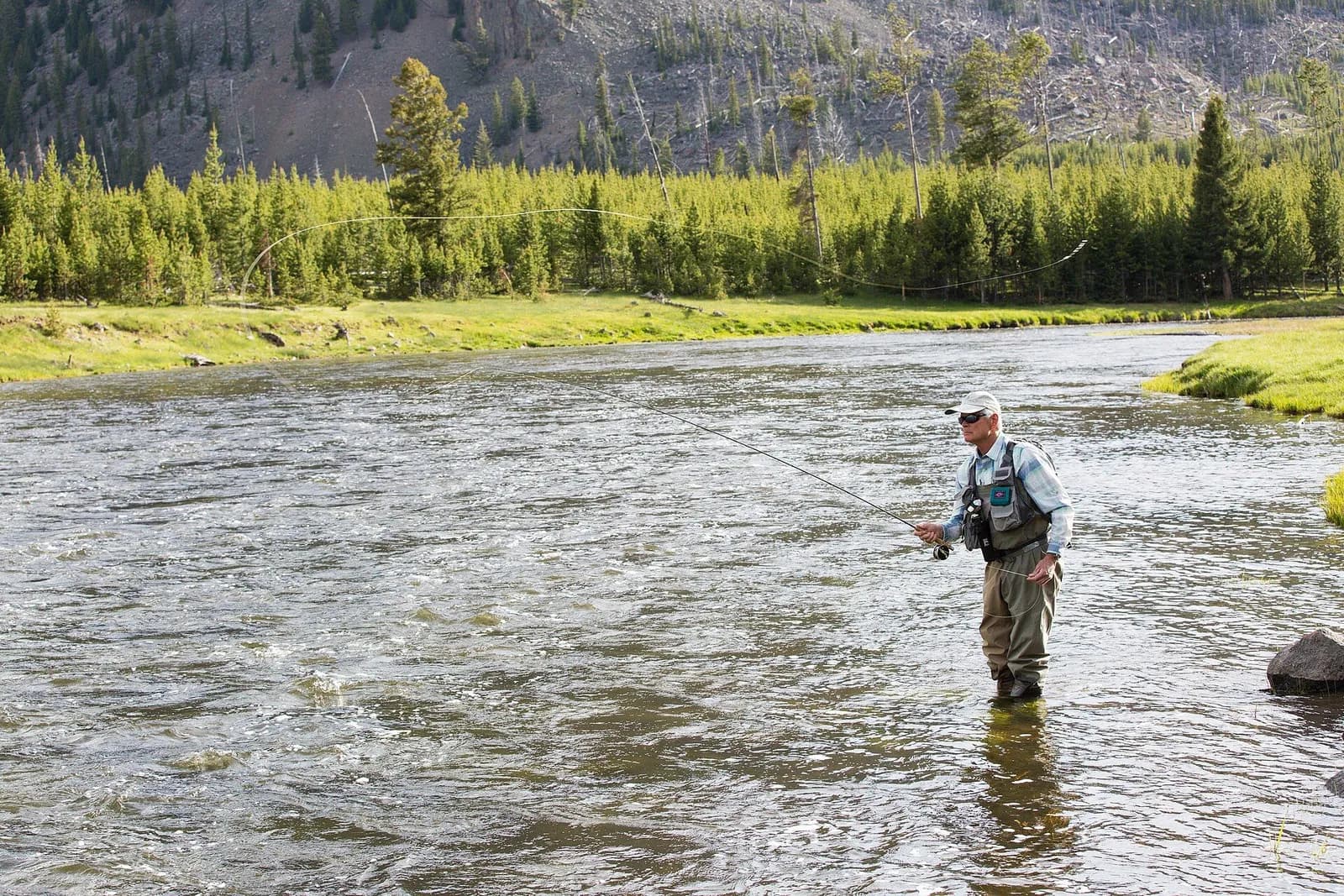
SECTION 01Notice how current changes
Look for seams where faster and slower water meet, soft pockets behind structure, riffles, runs and deeper pools. These are useful places to observe because current can deliver food while nearby structure gives fish a place to hold.
SECTION 02Approach without disturbing the water
Watch for fish, shadows, rising insects and changes in surface texture. Move slowly, stay low where possible, and avoid walking through the water you plan to fish. A quieter approach often preserves more options.
SECTION 03Read the whole setting
Check the river gauge and local reports for context, then verify current regulations and access with official sources. Conditions change, and a familiar-looking river can be unsafe or restricted today.