SECTION 01The rod and line work together
Rod weight is a shorthand for the line it is designed to cast. A 9-foot 5-weight outfit is a common freshwater starting point, while lighter or heavier outfits may suit smaller streams, wind, larger flies or stronger fish. It is a starting convention, not a rule.
Check a rod maker’s line recommendation and intended use. Match the reel to the rod and line, with enough backing for the fish and water you expect.
SECTION 02Leader, tippet and fly
A tapered leader turns over the fly and connects the fly line to tippet. Tippet is the thinner terminal section tied to the fly; its diameter and strength affect presentation and fish handling.
Carry a small selection of proven patterns for local food sources and conditions. Ask a nearby fly shop what they recommend for the specific water, season and regulations.
SECTION 03Complete the day’s kit
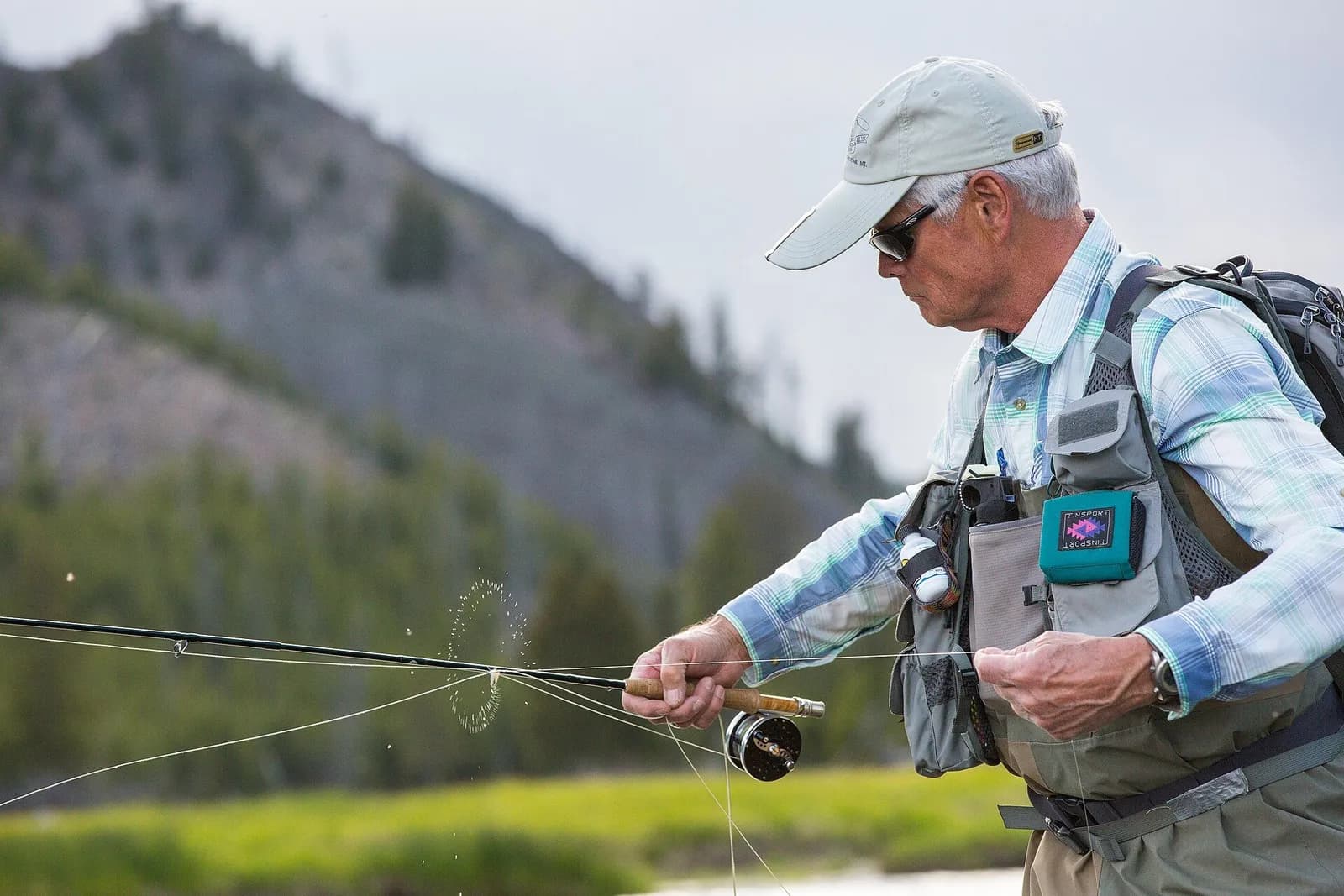
Nippers, forceps, a landing net, polarized glasses, water, layers and a first-aid kit can make a day safer and easier. Waders are optional and should be chosen for the conditions; many fish can be reached from shore.