Legendary Species · Saltwater and flats
Permit
Trachinotus falcatus[1]
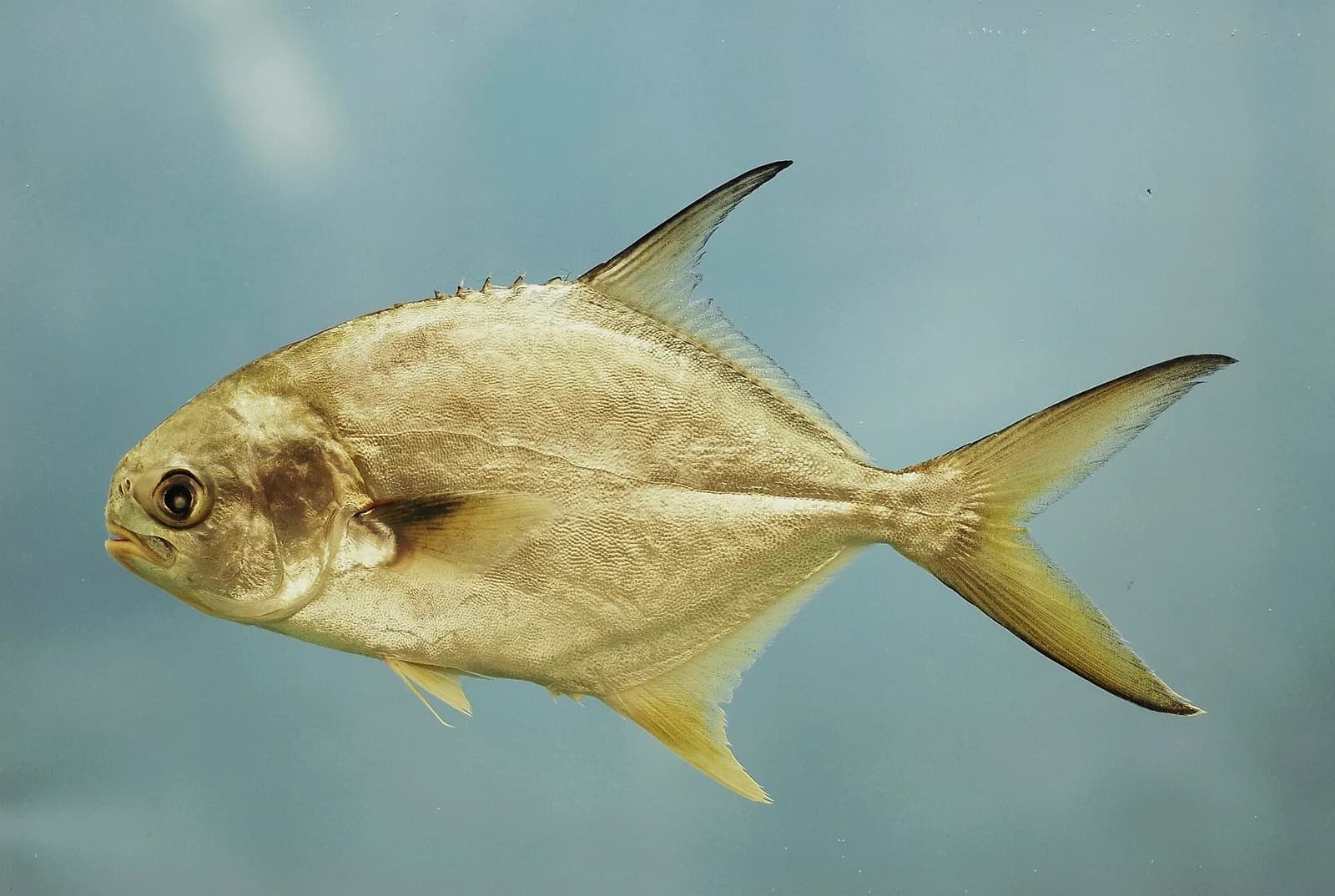
Permit have a gray, dark or iridescent blue back shading to silver sides; fish from dark water show golden tints on the belly.[1]
- 13waters list it
- 10states and regions
- 3agency sources
Identification
- Permit have a gray, dark or iridescent blue back shading to silver sides; fish from dark water show golden tints on the belly.[1]
What the source says
“Gray, dark or iridescent blue back, shading to silver sides Fish from dark waters have golden tints on belly”
- The forehead rises sharply to a hump and then slopes back, and the compressed body is deeper than a Florida pompano's.[1]
What the source says
“Forehead sharply rises to a “hump” then slopes back Compressed body that is deeper than Florida pompano”
- To tell a permit from a Florida pompano: small permit have teeth on the tongue (pompano do not), and on a pompano the dorsal fin starts in front of the anal fin.[1]
What the source says
“Small permit have teeth on their tongue (absent in pompano) Similar Species: Florida pompano, T. carolinus (dorsal fin begins in front of anal fin)”
Habitat and range
- Found offshore near structure, and inshore over grass flats, sand and in channels.[1]
What the source says
“Offshore near structure; inshore over grass flats, sand and in channels.”
Life history
- Permit spawn mainly in early summer and again in fall.[1]
What the source says
“Spawning occurs primarily in early summer and again in fall.”
- A special plate at the back of the mouth lets permit crush hard-shelled prey such as clams and crabs; they also eat small fishes and invertebrates.[1]
What the source says
“Permit have a specialized plate at the back of their mouth that helps them crush hard-shelled animals such as clams and crabs. Feeds on small fishes and invertebrates.”
Status, protections and rules
Legal status and rules as the agency stated them on the date read. Rules change: check the current regulations for the water.
- Florida (FWC): the Special Permit Zone (SPZ) covers state and adjacent federal waters south of a line due east from Cape Florida, Biscayne Bay south of Rickenbacker Causeway, and waters south of a line just south of Cape Sable.[2]
What the source says
“The Special Permit Zone includes state and adjacent federal waters south of a line running due east from Cape Florida in the Atlantic at 25° 40' North Latitude, waters of Biscayne Bay south of Rickenbacker Causeway, and south of a line just south of Cape Sable running due west through federal waters at 25° 09' North Latitude.”
- Florida (FWC rule, permit inside the SPZ tab): 22-inch fork length minimum, 1 per harvester, no more than 2 per vessel, and closed April 1 to July 31.[2]
What the source says
“Minimum Size Limit: 22" fork length Daily Bag Limit: 1 per harvester Vessel Limit: No more than 2 per vessel Season: Closed April 1-July 31”
- Florida (FWC rule, permit in all other state and federal waters outside the SPZ tab): an 11- to 22-inch fork length slot, with one fish over 22 inches allowed within a bag of 2 per harvester.[2]
What the source says
“Slot Limit: Not less than 11" or more than 22" fork length; may possess 1 over 22" included in the per person bag limit Daily Bag Limit: 2 per harvester”
- Belize: permit fall under the catch-and-release fishing law that also covers bonefish and tarpon (as stated by the Belize City Council).[3]
What the source says
“the catch and release fishing law which pertains to bonefish, tarpon and permit fish. These 3 species have been protected since 2008”
Fishing for it: what the agencies say
What agencies and extension services say about catching it, with the source for each line.
- Anglers cast live crabs to schools of permit; permit also take shrimp, clams and sometimes small fish.[1]
What the source says
“Anglers cast live crabs to schools of permit hoping to catch one of these line-stripping fish, which also take shrimp, clams and occasionally small fish.”
- Saltwater rules (slots, seasons, tags, handling) are set by the state or country and change often: read the current rules before each trip.
- A local guide will know the tides and where the fish are feeding this week.
Where to fish for permit
Our 13 water pages whose agency species list names permit (each list links to the agency page it comes from). A species missing from a list does not mean it is absent: many agencies publish no list for a water.
United States 1 water
Florida 1
The Bahamas 7 waters
Abaco 1
Andros 1
Bimini 1
Exuma 1
Grand Bahama 1
Long Island 1
Mexico 4 waters
Quintana Roo 4
- Bahía de la AscensiónAgency list: Comisión Nacional de Áreas Naturales Protegidas (CONANP)
- Bahía del Espíritu SantoAgency list: Comisión Nacional de Áreas Naturales Protegidas (CONANP)
- Laguna Boca PailaAgency list: Comisión Nacional de Áreas Naturales Protegidas (CONANP)
- Laguna ConilAgency list: CONANP
Belize 1 water
Belize 1
Destination hubs
Hubs that list one of these waters, or that a water page is near: each has guides, shops, licences and trip planning for the area.
- Ascension Bay & Sian Ka'an, Quintana Roo3 permit waters
- Belize flats: Ambergris Caye, Turneffe & Placencia, Belize1 permit water
- Florida Keys, Florida1 permit water
Sources
Every fact on this page is our paraphrase of the page cited beside it, read on the date shown. Rules and seasons change: check the agency's current regulations before you fish.
- Permit | FWC (species profile) Florida Fish and Wildlife Conservation Commission, read Oct 24, 2026.
- Permit, Florida pompano and African pompano | FWC Florida Fish and Wildlife Conservation Commission, read Oct 24, 2026.
- Sign Installation For Catch and Release Fishing Law Belize City Council, read Oct 24, 2026.