
Legendary Species · Char
Dolly Varden
Salvelinus malma[1]
As a char, Dolly Varden have light spots on a dark body, while trout have dark spots on a light body.[1]
- 11waters list it
- 1state or region
- 3agency sources
Identification
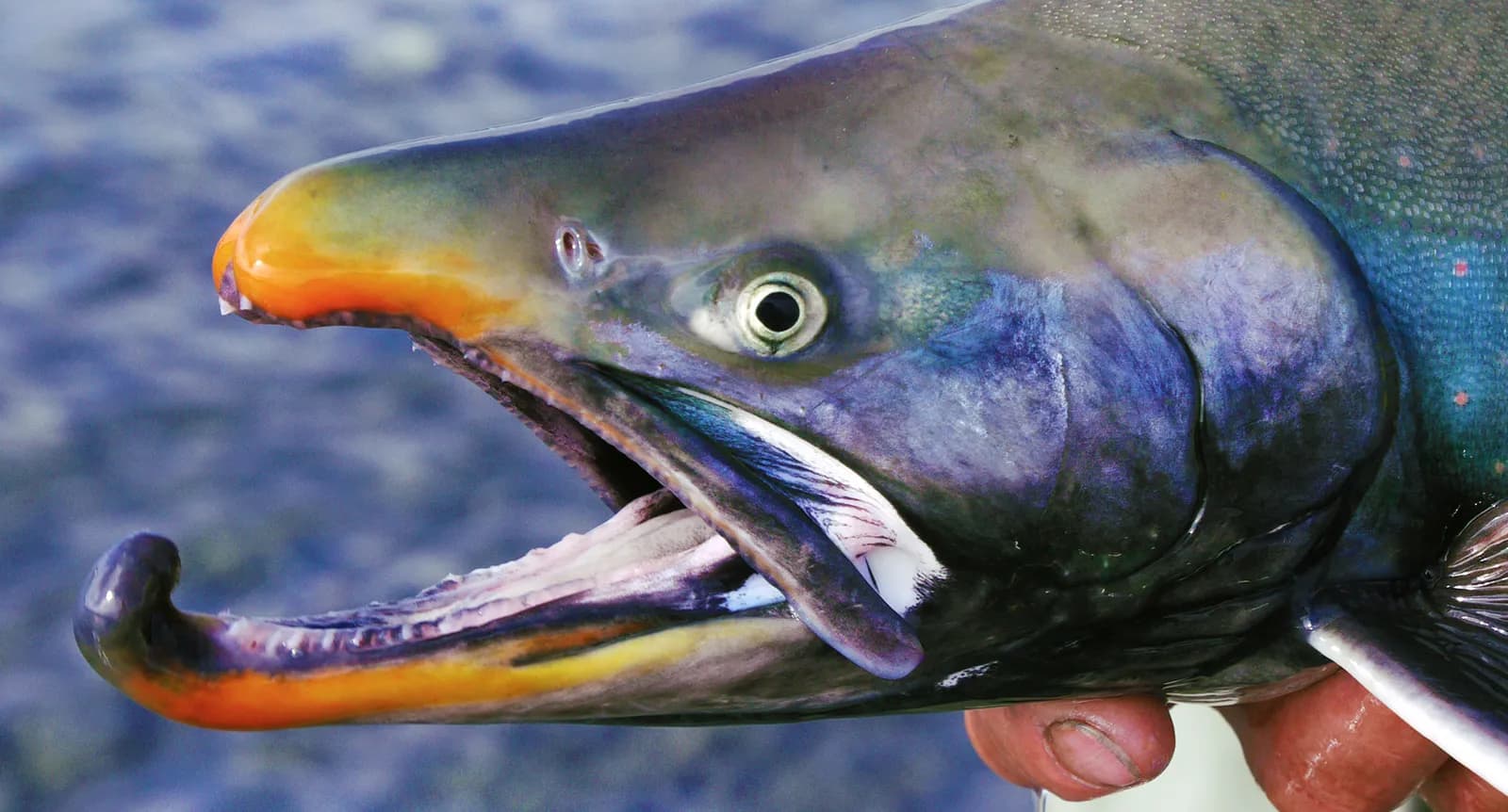
- As a char, Dolly Varden have light spots on a dark body, while trout have dark spots on a light body.[1]
What the source says
“char have light spots (white or yellow to red) on a dark body”
- Adult sea-run Dolly Varden are silvery with a faint green sheen and light orange spots.[1]
What the source says
“adult sea-run Dolly Varden are silvery with a faint green sheen overlain with light orange spots.”
- Spawning males become brightly coloured, with red, black and white bellies and black gill covers.[1]
What the source says
“males become brilliantly colored with red, black and white bellies, black gill covers”
- Telling them from Arctic char: spawning male Dolly Varden usually develop a distinct hooked jaw (kype), which is absent or reduced in spawning male Arctic char.[1]
What the source says
“Spawning male Dolly Varden usually develop a distinct kype, which is absent or reduced in spawning male Arctic char.”
- Also versus Arctic char: spawning Dolly Varden are usually red or pink on the lower belly with bright red spots.[2]
What the source says
“while spawning Dolly Varden are usually red or pink on the lower abdomen with bright red spots.”
Habitat and range
- Dolly Varden are found statewide in Alaska, especially in coastal areas, and also in streams of Interior Alaska and the Brooks Range.[1]
What the source says
“Statewide, especially in coastal areas, but also in streams of Interior Alaska and the Brooks Range.”
- Dolly Varden spend winters in lakes (southern form) or in rivers (northern form).[1]
What the source says
“Dolly Varden spend winters in lakes (southern form) or rivers (northern form).”
Life history
- They spawn in the fall, between September and November, over gravel in small headwater streams.[1]
What the source says
“Dolly Varden spawn in the fall, between September and November, over gravel beds in small headwater streams”
- Sea-run Dolly Varden follow salmon into rivers to feed on their eggs.[1]
What the source says
“Sea-run Dolly Varden are also known to follow salmon into rivers in order to feed on their highly-nutritious eggs.”
Status, protections and rules
Legal status and rules as the agency stated them on the date read. Rules change: check the current regulations for the water.
- ADF&G says Dolly Varden populations are generally stable throughout Alaska.[1]
What the source says
“Populations of Dolly Varden are generally stable throughout Alaska.”
- Historical note: Alaska paid a bounty on Dolly Varden from 1921 to 1941.[1]
What the source says
“From 1921 to 1941, there was a bounty on Dolly Varden in Alaska.”
Fishing for it: what the agencies say
What agencies and extension services say about catching it, with the source for each line.
- ADF&G calls Dolly Varden a popular sport and subsistence fish throughout their range.[3]
What the source says
“Dolly Varden are a popular sport and subsistence fish throughout their range.”
- Ask the nearest fly shop what the fish are feeding on this week before you choose flies.
- Read the water page's gauge before you go: flow and water temperature change by the day.
- Check the agency's rules for the water before you keep a fish.
Water temperature
Warm water stresses trout, char and salmon. These are the published temperature lines we show on every gauge, chosen state first: the state agency's own where it publishes one, otherwise federal guidance (said so). Each water page applies them to the gauge's live reading; the flow and temperature checker does the same for any gauge.
| State | Whose lines | Sources |
|---|---|---|
| Alaska | Federal guidance (the National Park Service); no Alaska line found | National Park Service · U.S. Fish and Wildlife Service |
Where to fish for dolly varden
Our 11 water pages whose agency species list names dolly varden (each list links to the agency page it comes from). A species missing from a list does not mean it is absent: many agencies publish no list for a water.
United States 11 waters
Alaska 11
Dolly Varden in AlaskaAll Alaska waters
- Aniak Riverlisted as “Arctic char/Dolly Varden”Agency list: Alaska Department of Fish and Game, Division of Sport Fish
- Kanektok Riverlisted as “Arctic char/Dolly Varden”Agency list: Alaska Department of Fish and Game, Division of Sport Fish
- Kisaralik Riverlisted as “Arctic char/Dolly Varden”Agency list: Alaska Department of Fish and Game, Division of Sport Fish
- Goodnews Riverlisted as “Arctic char/Dolly Varden”Agency list: Alaska Department of Fish and Game, Division of Sport Fish
- Campbell Creeklisted as “Arctic char/Dolly Varden”Agency list: Alaska Department of Fish and Game, Division of Sport Fish
- Tok Riverlisted as “Arctic char/Dolly Varden”Agency list: Alaska Department of Fish and Game, Division of Sport Fish
- Arolik Riverlisted as “Arctic char/Dolly Varden”Agency list: Alaska Department of Fish and Game, Division of Sport Fish
- Chilkoot RiverAgency list: Alaska Department of Fish and Game, Division of Sport Fish
- Chokosna Riverlisted as “Arctic char/Dolly Varden”Agency list: Alaska Department of Fish and Game, Division of Sport Fish
- Holitna Riverlisted as “Arctic char/Dolly Varden”Agency list: Alaska Department of Fish and Game, Division of Sport Fish
- Iliamna Riverlisted as “Arctic char/Dolly Varden”Agency list: Alaska Department of Fish and Game, Division of Sport Fish
Destination hubs
Hubs that list one of these waters, or that a water page is near: each has guides, shops, licences and trip planning for the area.
- Anchorage & Eagle River, Alaska1 dolly varden water
Sources
Every fact on this page is our paraphrase of the page cited beside it, read on the date shown. Rules and seasons change: check the agency's current regulations before you fish.
- Dolly Varden Species Profile, Alaska Department of Fish and Game Alaska Department of Fish and Game, read Oct 24, 2026.
- Arctic Char Species Profile, Alaska Department of Fish and Game Alaska Department of Fish and Game, read Oct 24, 2026.
- Dolly Varden Uses, Alaska Department of Fish and Game Alaska Department of Fish and Game, read Oct 24, 2026.
1 state or region has a page of dolly varden waters of its own (five or more waters).