
Legendary Species · Idaho
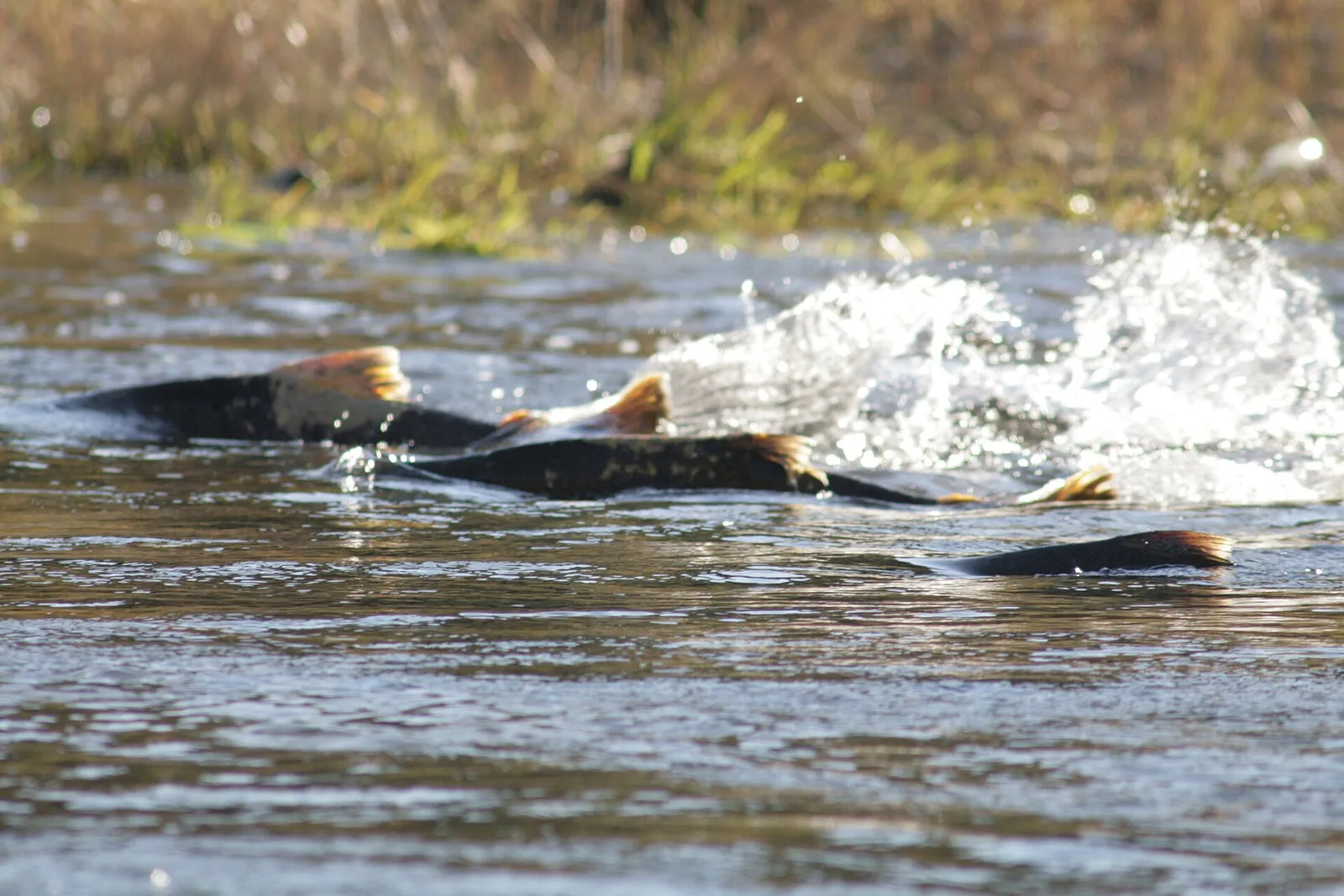
Chinook salmon in Idaho
Oncorhynchus tshawytscha[1]
10 Idaho waters whose agency species list names chinook salmon. Each links to its water page (gauge, regulations, access map, guides and shops) and to the agency list it comes from.
- 10waters list it
- 0destination hubs
Idaho waters
Most fished first. A species missing from an agency list does not mean it is absent; this page lists only waters whose list names it (at least 5 are needed for a page).
- Salmon RiverAgency list: Idaho Department of Fish and Game
- Lochsa RiverAgency list: Idaho Department of Fish and Game
- South Fork Salmon RiverAgency list: Idaho Department of Fish and Game
- Clearwater RiverAgency list: Idaho Department of Fish and Game
- Middle Fork Clearwater RiverAgency list: Idaho Department of Fish and Game
- South Fork Clearwater RiverAgency list: Idaho Department of Fish and Game
- Anderson Ranch ReservoirAgency list: Idaho Department of Fish and Game
- Coeur d'Alene LakeAgency list: Idaho Department of Fish and Game
- Little Salmon RiverAgency list: Idaho Department of Fish and Game
- Deadwood ReservoirAgency list: Idaho Department of Fish and Game
Identification
- Chinook have black spots on the upper body and on both lobes of the tail, and black pigment along the gum line, which is why they are called "blackmouth."[1]
What the source says
“They have black spots on the upper half of the body and on both lobes of the tail fin. Chinook salmon also have a black pigment along the gum line, thus the nickname "blackmouth."”
- Alaska's angler tip: kings have spots on both tail lobes, while coho have spots only on the upper lobe. Kings have a black mouth with a black gum line in both ocean and spawning phases.[2]
What the source says
“Ocean-phase and spawning chinook (king) salmon have a black mouth with a black gum-line. They have black spots on their back and on both lobes of the tail. Kings are different from coho in that their tail spots cover both lobes, whereas a coho has spots only on the upper lobe of its tail.”
- Spawning colour: as they near spawning in fresh water, Chinook turn olive brown, red or purplish, most clearly in males. Spawning males have a hooked upper jaw.[1]
What the source says
“In fresh water, when they are about to spawn, Chinook change to olive brown, red, or purplish. This color change is particularly evident in males. Spawning adult males can be distinguished by their hooked upper jaw.”
Status, protections and rules
As each agency stated them on the date read; a rule applies only where its agency says so. Check the current regulations for the water before you fish.
- NOAA Fisheries lists two Chinook units as endangered under the ESA: Sacramento River winter-run and Upper Columbia River spring-run.[3]
What the source says
“ESA Endangered Sacramento River winter-run Upper Columbia River spring-run”
- NOAA lists seven Chinook units as threatened: California coastal, Central Valley spring-run, Lower Columbia River, Puget Sound, Snake River fall-run, Snake River spring/summer-run and Upper Willamette River.[3]
What the source says
“ESA Threatened California coastal Central Valley spring-run Lower Columbia River Puget Sound Snake River fall-run Snake River spring/summer-run Upper Willamette River”
Water temperature in Idaho
- Under 66°FIn the study Idaho Fish and Game cites, trout landed in water under 66°F survived best: mortality “was 69% higher for trout landed at 73°F water temperatures than for those landed when waters were less than 66°F.” In summer, “early-mornings are typically best while the water is still cool.”
- WarmingIdaho Fish and Game cites a study in which mortality “was 69% higher for trout landed at 73°F water temperatures than for those landed when waters were less than 66°F.” Fish early: “early-mornings are typically best while the water is still cool.”
- 73°FIdaho Fish and Game: “On those occasions where trout streams do get above 73°F, anglers may want to pause fishing because catch rates are noticeably lower.” Idaho sets no temperature closure: “Idaho Fish and Game is hesitant to close fishing in wild trout waters based on warm water temperatures.”
Sources: Perspective: Trout fishing during low water and high temperatures (25 July 2024; archived copy) (Idaho Department of Fish and Game); The heat is on, but trout and other coldwater fish have been around the block a time or two (9 Aug 2022; archived copy) (Idaho Department of Fish and Game).
Hatch & season charts
- Northern Rockies8 sourced rows
Sources
Every fact on this page is our paraphrase of the page cited beside it, read on the date shown. Rules and seasons change: check the agency's current regulations before you fish.
- Chinook Salmon | NOAA Fisheries NOAA Fisheries, read Oct 24, 2026.
- Alaska's Five Species of Pacific Salmon, Alaska Department of Fish and Game Alaska Department of Fish and Game, read Oct 24, 2026.
- Chinook Salmon (Protected) | NOAA Fisheries NOAA Fisheries, read Oct 24, 2026.